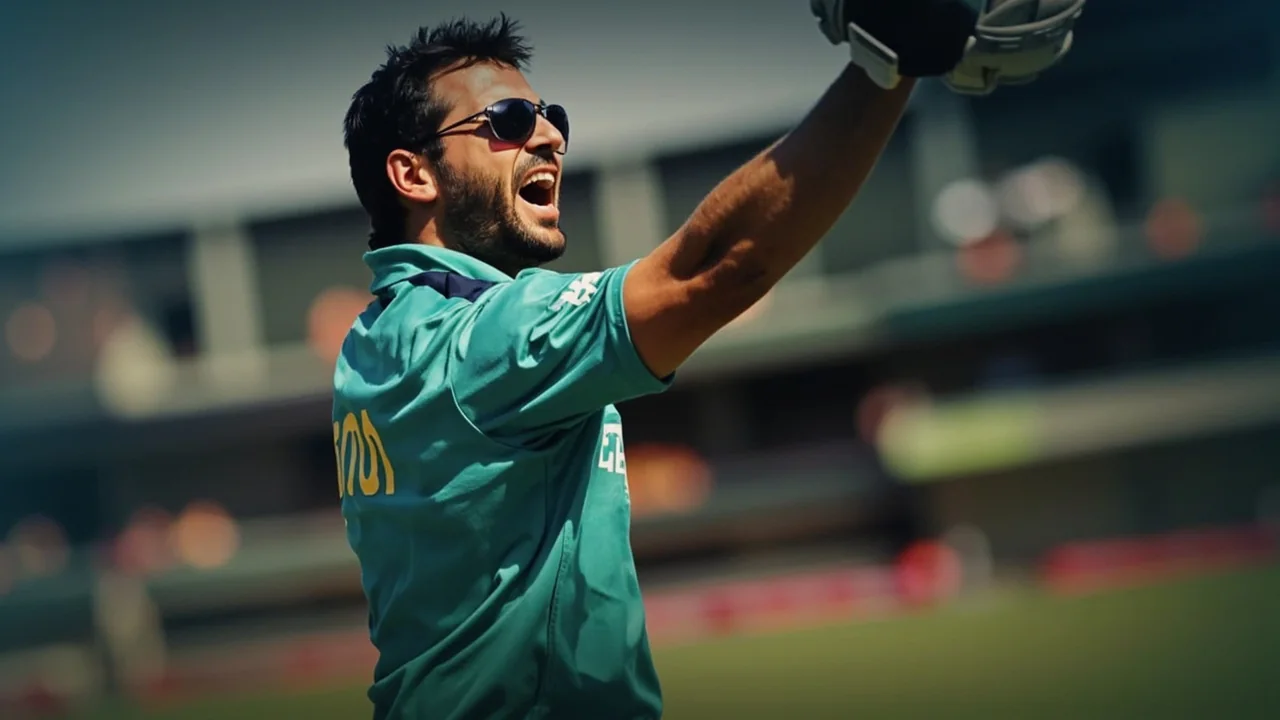
- What actually happened to CrickPe in late February 2025
- Why the 28% GST changed the math for new fantasy apps
- How the incumbents redrew the review criteria
- A five-point checklist every review should now require
- Compliance, withdrawal and the user-money fault line
- CrickPe's lasting mark on fantasy cricket reviews
- FAQ for fantasy cricket reviews after CrickPe
Ashneer Grover ended the suspense on 26 February 2025 with a short statement to The Times of India. CrickPe, the fantasy cricket platform he had launched ahead of the 2023 IPL season through his startup Third Unicorn, was done. New contests would not roll out. The closure came after roughly two years of building, scaling, and contesting an idea that originally aimed to reward cricketers out of the game pot — something the model never quite paid for once the tax regime changed.
For fantasy cricket reviewers in India, the CrickPe shutdown is more than a founder's exit note. It is the first major mid-tier fantasy platform to fold in the post-GST era, and it forces a different kind of review. Until 2023, an app review could read platform liquidity, contest breadth and onboarding speed. After 28% GST, every review has to read runway, withdrawal hygiene and the legal distinction between gaming and gambling — the same distinction Grover said had been deliberately conflated in India's policy framing.
What actually happened to CrickPe in late February 2025
CrickPe opened its fantasy cricket contests in early 2023, a few weeks before that year's Indian Premier League. Its pitch to players was simple: small leagues, fast leaderboards and a cleaner interface than the apps most Indian cricket fans already had on their phones. Behind the scenes, the founders had paired the product with three publicly stated ideas — encourage lesser-marketed cricketers through a different prize pool, keep contest entries small, and let the platform's brand grow with the IPL window.
Two years later, the app told users it was taking "a timeout." The in-app message was unusually plain: "We've had an amazing innings together. While we won't be rolling out new contests on the app anymore, this is just a timeout." Withdrawal of existing winnings remained open at the time of the announcement. The Times of India report, citing Inc42's earlier coverage, made clear that the word "timeout" was softening a permanent exit.
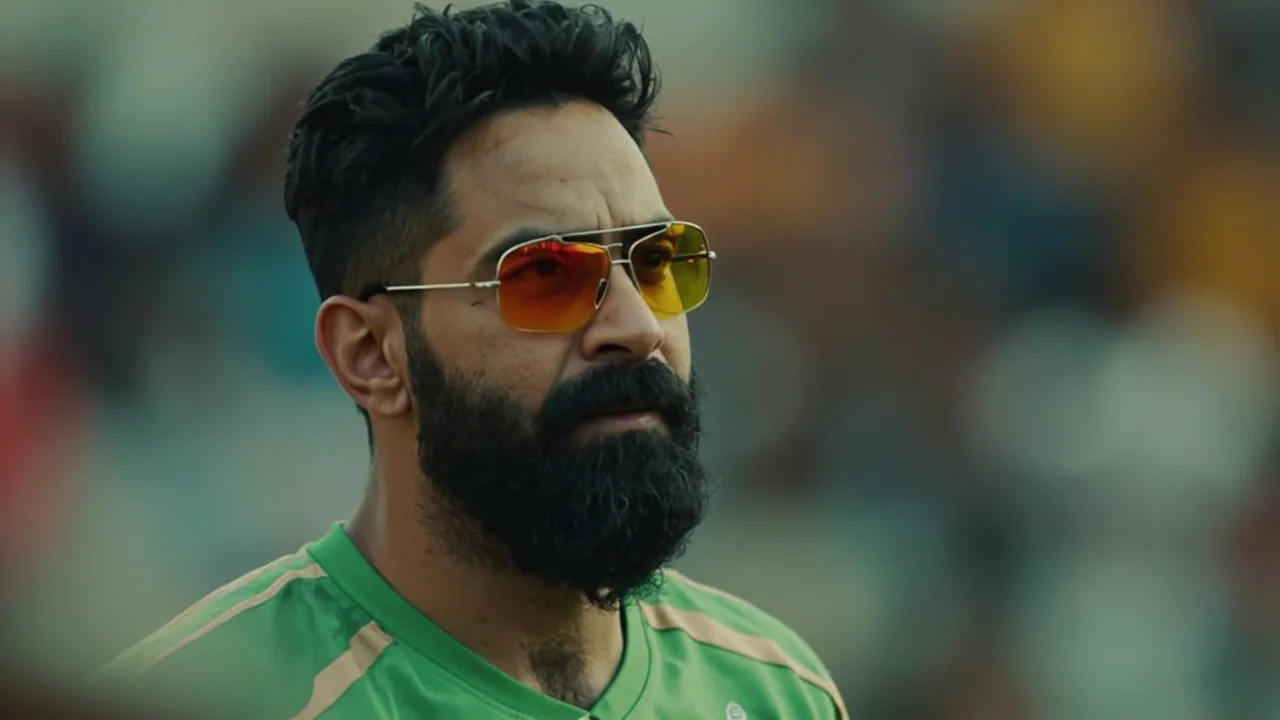
Grover's accompanying comment tied the closure to two pressure points. The first was the 28% goods and services tax on online real-money gaming, introduced on 1 October 2023, which replaced the previous 18% tax on platform fees for skill-based contests. The second was, in his framing, the conflation of skill gaming with gambling in Indian policy and public discourse — a conflation he argued had "murdered the online gaming industry," a phrase he had earlier posted on X and later deleted.
The Supreme Court, separately, had just put a temporary hold on GST proceedings against 49 real-money gaming companies at the time of the report. That stay gave the larger platforms a procedural breather but did not change the underlying rate. CrickPe, like most smaller platforms, did not have the legal firepower to litigate the regime and the brand depth to absorb it.
Why the 28% GST changed the math for new fantasy apps
A fantasy cricket app review before October 2023 could focus on three numbers: prize pool size, contest variety and how quickly the operator settled withdrawals. The 28% GST on the full face value of contest entry — not just on platform commission — added a fourth number that no review could ignore: the platform's working capital per contest.
Before the new rate, a 1,000-rupee entry contest would route roughly 80-85% back to players as prize money, 5-10% to the platform as commission, and the rest to GST on platform fee. After 1 October 2023, the operator must remit 28% GST on the full ₹1,000 entry, then build a prize pool out of what is left. To keep prizes comparable, the platform either needs deep reserves or a much smaller prize percentage. Either path squeezes a young app harder than an incumbent that already has scale and contest liquidity.
That squeeze is exactly what a good post-2023 fantasy cricket review should expose. A reviewer reading a small-app pitch should ask: how much of each entry is left over after GST? How long can the operator keep the contest prize pool where it is? Is there a backup plan if the rate is reviewed again? A review that does not surface this question is not really reviewing the app's viability.
The tax math in plain numbers
For a notional ₹1,000 contest entry on a post-GST fantasy cricket platform: ₹280 goes to GST, ₹700-750 is the operator's pool for prizes and operating margin. The operator's pool now needs to cover prize distribution, technology, KYC, contest hosting, customer support and a margin. A young app without contest volume pays much of this from its reserve. A CrickPe-class app does not have that reserve for long, especially when its founder's stated goal was specifically to direct a chunk of the pool to lesser-marketed cricketers — a generous aim that becomes impossible at 28%.
What the Supreme Court stay did and did not change
The temporary Supreme Court stay on GST enforcement against 49 real-money gaming firms was procedural, not fiscal. It allowed those firms to contest how the 28% rate is computed without having to remit the difference immediately. It did not cancel the rate. For a startup like CrickPe, the stay was useful background but not a runway. The structural tax bill was still due.
How the incumbents redrew the review criteria
When a small entrant exits, the incumbents do not disappear. They consolidate. The clearest effect of the CrickPe shutdown was the consolidation of the Indian fantasy cricket landscape around a handful of large operators — Dream11, MPL, My11Circle, PlayerzPot and MyTeam11 being the most frequently cited names in 2025-26 reviews. For the reviewer, the consequence is straightforward: the criteria for a fantasy cricket review now read more like a portfolio review than a single-app review.
From app review to portfolio review
A single-app review used to ask: is this operator trustworthy? A post-CrickPe review has to ask: which operator is best for which contest style, which withdrawal expectation and which tax treatment? The answer for a grand-league player is rarely "one app" — it is one app for big stakes, another for practice and a third for club contests. The sports club 2026 review of the five leading apps reads this same way: each app wins on one pillar and slips on another.
Why incumbents could absorb the GST
The surviving apps have roughly three advantages the second tier cannot easily match. First, contest liquidity — bigger apps fill mega contests with thousands of entries, which spreads fixed technology and compliance costs across many users. Second, contract depth — a Dream11 or MPL has long-standing sponsorship, advertising and bank partnerships that smooth the working-capital cycle. Third, legal posture — incumbents can afford the lawyers who keep arguing the GST scope in court. A startup with CrickPe's ambitions cannot finance any of those three lines on its own, which is why a fantasy cricket review should now treat regulatory runway as a first-class criterion.
A five-point checklist every review should now require
Putting the CrickPe shutdown into a usable form, any serious fantasy cricket review from 2025 onward should run through five questions before recommending an app. These are not nice-to-haves. They are the new floor.
1. Runway and corporate structure
Who owns the operating entity? How long has the parent entity been active? Is there a public parent, a listed parent or a privately held one? A shutdown moves faster than a wind-down, and only operators with several rounds of compliance behind them tend to keep withdrawal alive during a wind-down. CrickPe did — its withdrawal window stayed open through the announcement — but that was the exception, not the rule.
2. Tax posture and litigation history
Is the operator among the 49 firms covered by the Supreme Court stay? Has it filed its own writ? How transparent is it about the GST line on a user's contest entry? An operator that cannot answer these questions cleanly is one the reviewer should mark down, not up.
3. Withdrawal speed on UPI
The cleanest post-CrickPe signal of an operator's health is whether winnings land in a UPI account in minutes, not in days. UPI settlement has become the de facto barometer because every operator uses the same rails, so the difference is entirely in-house. Reviews that don't publish a current UPI withdrawal observation are out of date.
4. KYC, state eligibility and responsible play
Paid contests are still restricted in Telangana, Andhra Pradesh, Assam, Odisha, Sikkim and Nagaland, with Tamil Nadu partially restricted. A reviewer who doesn't print the geo-check behaviour of the app is leaving the most important risk to the user. Likewise a reviewer should report whether the app offers spend caps, time-out reminders and a clean self-exclusion flow.
5. Contest economics above the headline
Headline prize pools are easy to print. A useful review now reports how many entries divide the headline pool, what percentage of entries actually win something back and how that figure compares to the operator's previous season. A contest pool that looks large but pays out a tiny share of entries is a worse deal than a smaller pool with a fairer distribution.
Compliance, withdrawal and the user-money fault line
CrickPe's announcement is also instructive in what it did not do. It did not lock withdrawals. It did not freeze KYC. It did not freeze user balances. For a startup that did not have an unlimited reserve, that restraint is itself a data point. It signals a sequence in which contest hosting stops first, then contest settlement, then withdrawal clearing. The user-money fault line is reached only at the last step in a proper wind-down.
That order matters when reviewing any app. If a review reads "users can still withdraw", that is one signal. If the next quarter brings "withdrawals delayed", that is a second signal. If the next brings "KYC review paused", the operator has crossed the line into user-money territory, and the reviewer's standing position should reverse immediately.
What an honest withdrawal check looks like
Try a ₹100 withdraw on a quiet weekday morning. Time it. Try again on a Friday match night. Time it. Try a ₹1,000 withdraw. Time it. The result is a much sharper review than any platform-published statistic. It also catches KYC friction in real time — a review that never asks "did KYC gate this withdrawal?" is repeating the kind of omission that left the second-tier fantasy market opaque before the GST regime made runway so visible.
CrickPe's lasting mark on fantasy cricket reviews
CrickPe's two-year run is unlikely to be remembered as a product story. It is more useful as a teaching case. Three lessons stand out for the way reviews should be written from now on.
First, a fantasy cricket review is incomplete without a runway assessment. A brand-new app with great UX and no parent backing is a higher-risk review target than an older app with a smaller feature set. Reviews should say so plainly.
Second, the line between skill and chance is not a marketing slogan. The Supreme Court stayed the GST enforcement specifically because the gaming-versus-gambling distinction still matters under Indian law. Reviews should treat state-by-state eligibility as a hard filter, not a caveat.
Third, withdrawal honesty is the only realistic signal of operator health in a tax-stressed market. The review that tracks UPI settlement weekly, instead of feature-parading the app, is the one that survives the next shutdown.
FAQ for fantasy cricket reviews after CrickPe
Why did Ashneer Grover shut down CrickPe in February 2025?
Grover publicly attributed the closure to the 28% goods and services tax on online real-money gaming, introduced on 1 October 2023, and to the conflation of skill gaming with gambling in India's public framing of the category. With that tax base, the founder said, the platform's economics no longer left room to incentivise cricketers out of the contest pot, which had been the original idea behind CrickPe.
Was CrickPe the only fantasy cricket app to close after the 28% GST?
It was the highest-profile mid-tier closure tied directly to the GST regime. Several smaller apps in the same window also wound down contests, though they did not all name the tax as the cause. The 49-firm Supreme Court stay was procedural and did not cancel the 28% rate, so the structural tax bill remained and continued to compress second-tier economics throughout 2024 and early 2025.
What does the CrickPe shutdown mean for a fantasy cricket review written today?
It means the review should now cover five points: corporate runway, the operator's tax posture and litigation history, current UPI withdrawal speed, state-by-state eligibility and the contest economics above the headline prize pool. A review that ignores any of these is leaving a key risk on the user's plate.
Are Dream11, MPL and My11Circle safer than the smaller apps?
They have the contest liquidity, the legal firepower and the banking partnerships that smaller entrants lack, which makes them materially safer on runway and withdrawal. That does not mean they are uniformly better for every player — they still differ on lineup math, free-practice depth, bonus fairness and KYC flow — but for the survival question after the 28% GST, the incumbents are the safer review targets.
Is fantasy cricket still legal across India?
Skill-based paid fantasy contests remain restricted in Telangana, Andhra Pradesh, Assam, Odisha, Sikkim and Nagaland, with court activity still in motion in parts of Tamil Nadu. Apps geo-check PAN and location at deposit and KYC, and using a VPN to bypass a state block typically results in an account freeze rather than contest access. Free contests are unaffected by these restrictions.
How should a user handle an in-app shutdown message like CrickPe's "timeout" note?
Read it as a wind-down signal, not a marketing line. Withdraw any balance immediately, complete pending KYC, save the message screenshot with a timestamp and avoid further deposits until the operator publishes a clear status update. If withdrawals stall in the following weeks, raise a ticket with the app's grievance officer and escalate to the relevant state-level gaming authority.
Related sports club reads
Responsible play: sports club publishes fantasy-cricket analysis for adults in India. Paid contests may be restricted in some states; check current eligibility inside the app before paying an entry. If play stops being fun, stop. Helpline: iCall 9152987821 (10am-6pm Mon-Sat) · Gambling Therapy India.