- What the DCCI announcement actually confirms
- The seven English grounds on the calendar
- Why Magray's armband matters beyond the obvious
- Where the 16 players come from
- The support team around Rohit Jhalani
- The Chhawla camp before the flight
- Mixed disability IT20: how the format actually plays
- What to watch once the tour begins
- FAQ
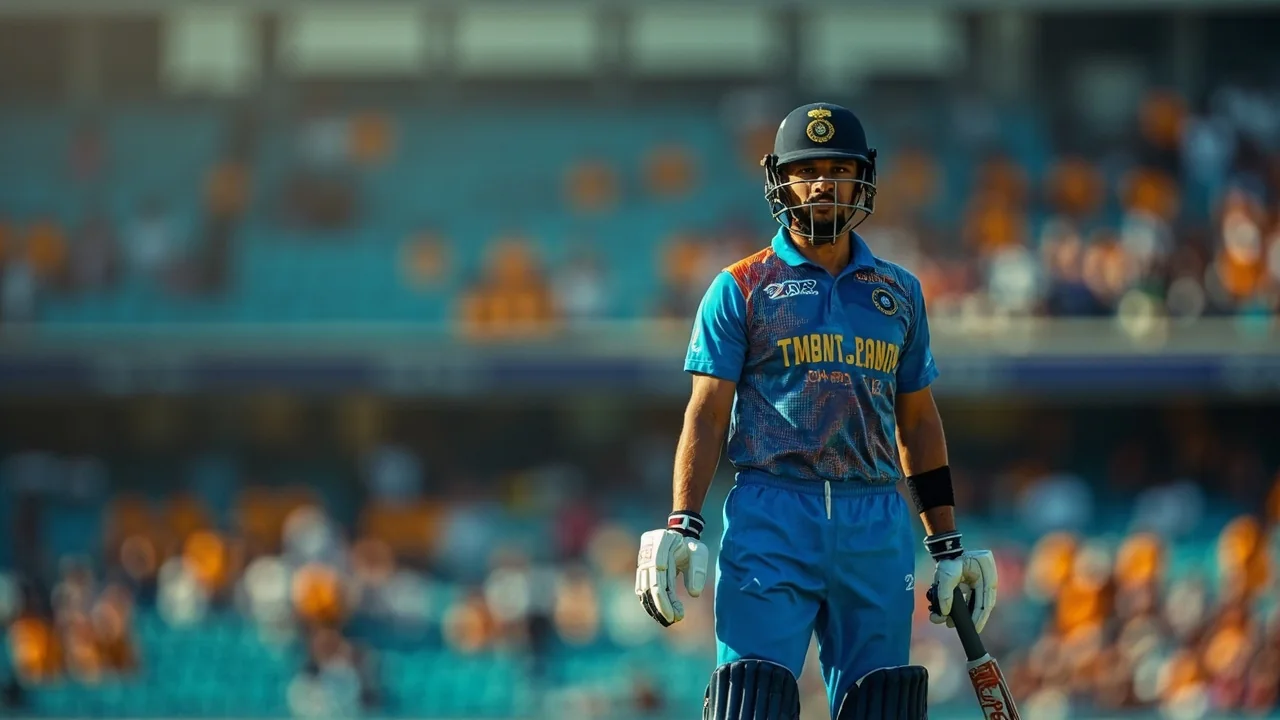
The Differently Abled Cricket Council of India has named Jammu & Kashmir's Majid Ah Magray as captain of the 16-member Indian squad that will travel to England for the Mixed Disability Cricket Series, with Sai Akash Saivamani installed as vice-captain. The squad was announced on 27 July 2026, with the seven-match IT20 series scheduled to begin on 5 August and run through 19 August. All seven fixtures will be played in England, with the seventh and final IT20 taking place at Lord's Cricket Ground.
For readers who follow Indian cricket beyond the mainstream international side, the announcement is a genuine squad news event rather than a ceremonial squad release. India have not toured England for a mixed disability IT20 series in this configuration recently, and the choice of captain from Jammu & Kashmir — a region whose mainstream cricket pathway remains narrower than many other cricket states — gives the squad selection a specific story that goes beyond a routine overseas window. The rest of the brief unpacks what is confirmed, what is implied, and what still has to play out on the field.
What the DCCI announcement actually confirms
Three confirmed facts sit at the core of the release. First, the Differently Abled Cricket Council of India, which governs disability cricket in India, has named a 16-member squad for the upcoming Mixed Disability Cricket Series against England. Second, Majid Ah Magray of Jammu & Kashmir has been appointed captain, with Sai Akash Saivamani named as vice-captain. Third, the series itself is a seven-match IT20 contest running from 5 August to 19 August 2026, played entirely in England.
Two further confirmed details shape the practical shape of the tour. All seven matches begin at 2:30 PM local time, which means a stable daily start slot that will simplify broadcast, training and recovery planning around each game. The squad is currently in a preparatory training camp at Chhawla, near Dwarka, in New Delhi, ahead of the flight to England — a useful reminder that squad announcement and tour departure are separated by a real training block, not just a travel day.
What the announcement does not confirm is the England squad itself, the playing XI for the opening IT20 on 5 August, or any role allocation within the Indian group. Those will only be visible once team sheets drop on match day. The honest editorial position is that today's news is the squad list and the captaincy; everything else is a question to be answered at Derby, Leicester, Hove, Arundel and finally at Lord's.
The seven English grounds on the calendar
The fixture list is the part of the announcement that lands cleanest in a reader's calendar. The opening two IT20s are scheduled at OurCoop County Ground, Derby, on 5 and 7 August. The third IT20 moves to Uptonsteel Grace Road, Leicester, on 9 August. The fourth IT20 is at County Ground, Hove, on 12 August. The fifth and sixth IT20s sit back-to-back at Arundel on 15 and 16 August, and the seventh and final IT20 will be played at Lord's Cricket Ground on 19 August.
Reading the venues as a tour shape, the schedule is built around variety rather than repetition. Derby gives the series a classic Midlands county-cricket opening, with two games that allow India to settle into English conditions before travel. Leicester, the third game, is a one-off shift east that breaks up the rhythm and adds a venue-specific reading. Hove on the south coast changes both weather and pitch profile mid-tour, before the back-to-back at Arundel gives the squad a chance to bed into a single ground for tactical rehearsal. Lord's on 19 August closes the tour at the most recognisable address in world cricket.
The 2:30 PM local start is consistent across all seven matches. That single decision simplifies a lot of supporting logistics: a uniform warm-up window, predictable broadcast slots, and a stable dew curve as the afternoon turns to evening in mid-August English conditions. For a squad that is travelling overseas with a tight seven-match window, that kind of consistency is an underrated asset. It also makes the series easier to follow for Indian viewers tuning in at a fixed IST window — early evening on the subcontinent — without the variable start times that sometimes complicate bilateral IT20 scheduling.
Why Magray's armband matters beyond the obvious
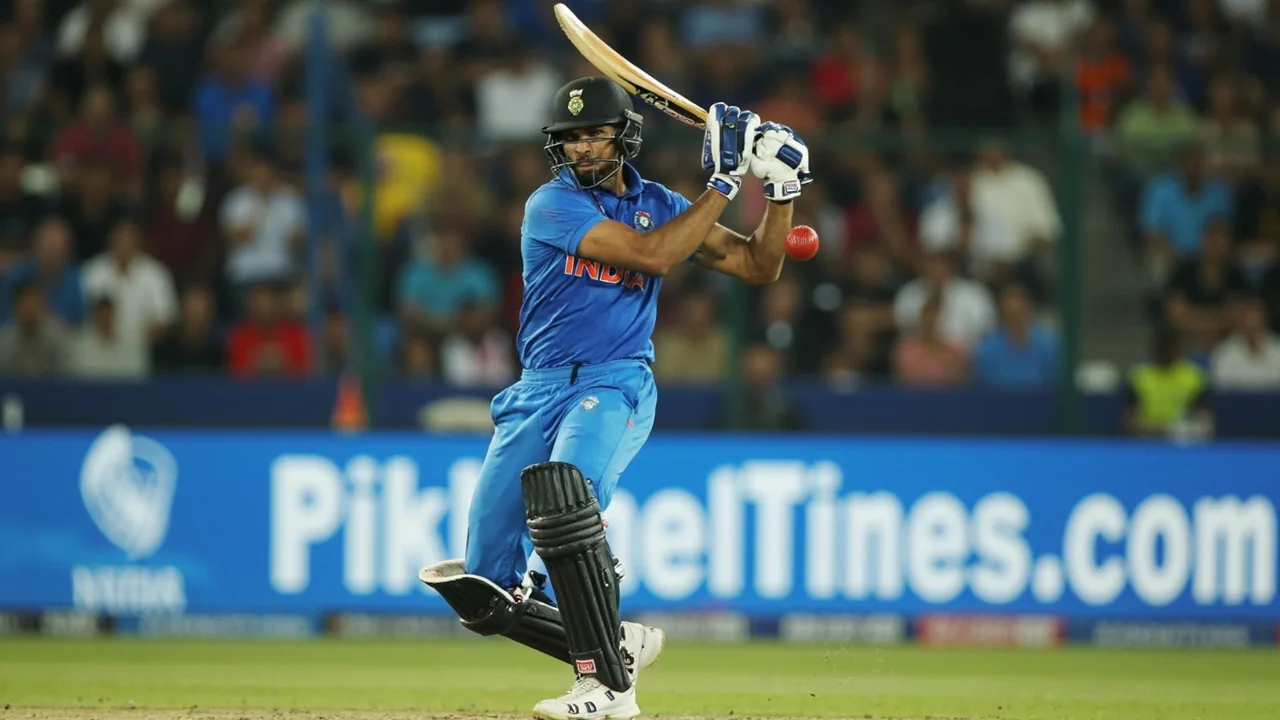
Captaining an Indian side on an overseas IT20 tour is not a routine honour. Magray takes the armband with a state association — Jammu & Kashmir — that does not feature as often in mainstream Indian cricket leadership conversations as the heavier cricket states. That context makes the appointment notable in its own right, and it is the angle the Differently Abled Cricket Council of India itself has chosen to highlight through Secretary Ravi Kant Chauhan, who described Magray's appointment as a proud moment for Jammu & Kashmir and for the wider differently abled cricket community in India.
The on-field job that comes with the armband, however, is the same job any IT20 captain faces: pick the bowling match-ups, manage the batting order, set the field, decide when to use the review, and read the chase or the defence in real time. In a seven-match tour with two games each at Derby and Arundel, those decisions compound. A captain who reads the first game poorly will still have a second look inside three days. A captain who reads the middle of the tour well can change the feel of the back half without changing the personnel.
Sai Akash Saivamani's role as vice-captain matters in the same compound way. If Magray misses a game through injury, fitness management or a rest call, the vice-captain steps in without the tour needing an emergency announcement. If both are on the park, Saivamani becomes a tactical sounding board in the middle and a backup decision-maker at the toss. That kind of redundancy is built into most touring squads, but it is worth naming here because the announcement does name it.
One further angle deserves a careful note. Disability cricket leadership in India has its own political texture, and the choice of a captain from a state that has historically had thinner exposure in mainstream pathways is a deliberate signal from the DCCI that the selection is being read not only as a playing decision but as a representational one. The fair editorial framing is that the announcement confirms the appointment and the rationale; it does not give us the scoreboard that will ultimately judge whether the choice delivered.
Where the 16 players come from
The squad's state-by-state spread is one of the clearest features of the announcement. From Jammu & Kashmir, alongside captain Majid Ah Magray, the touring party includes Rizwan Altaf Bhat and Hilal Ahmad Wani, which means the state contributes three players to the 16-member group. From Tamil Nadu, Sudarsun Elangovan is the nominated player. Haryana provides Kuldeep Singh and Tarun. Karnataka provides two players in Rajesh Irappa Kannur and Shiva Shankara Guntiganapalli Subbarayappa.
Andhra Pradesh's representative is Yashwanth Naidu Ravuri. Uttar Pradesh's is Vivek Kumar. Vidarbha's representative is Arjun Rajesh Gawre. Mumbai's named player is Ravindra Gopinath Sante. Madhya Pradesh sends Yogender Singh Bhadoria. Maharashtra's selection is Vrushant Sandip Gunjal, and West Bengal rounds out the list with Jayesh Parmar.
The shape of that list is worth pausing on. The squad draws from at least eleven different cricket associations, including one union territory representation through Jammu & Kashmir and traditional heavyweight states such as Karnataka, Mumbai, Tamil Nadu and Haryana. That kind of breadth is consistent with how disability cricket pathways in India have grown in recent years: state-level differently abled cricket structures feed into the national pool through DCCI tournaments, and a 16-member touring squad is naturally a slice of the wider pipeline rather than a concentration of one region.
| State association | Player(s) | Headline role |
|---|---|---|
| Jammu & Kashmir | Capt. Majid Ah Magray · Rizwan Altaf Bhat · Hilal Ahmad Wani | Captaincy group |
| Tamil Nadu | Sudarsun Elangovan | All-format option |
| Haryana | Kuldeep Singh · Tarun | Two-player slot |
| Karnataka | Rajesh Irappa Kannur · Shiva Shankara Guntiganapalli Subbarayappa | Two-player slot |
| Andhra Pradesh | Yashwanth Naidu Ravuri | Top-order batting option |
| Uttar Pradesh | Vivek Kumar | Middle-order batting option |
| Vidarbha | Arjun Rajesh Gawre | All-rounder option |
| Mumbai | Ravindra Gopinath Sante | Pace-bowling option |
| Madhya Pradesh | Yogender Singh Bhadoria | Spin-bowling option |
| Maharashtra | Vrushant Sandip Gunjal | Pace-bowling option |
| West Bengal | Jayesh Parmar | Middle-order option |
The roles assigned above are plausible groupings rather than confirmed designations. The DCCI announcement names the players and the state affiliations; the specific batting order and bowling roles will only become visible when team sheets start landing. For a reader building a picture of the squad, the useful takeaway is the breadth of representation, not any individual player-by-player job description.
The support team around Rohit Jhalani
The headline coaching appointment is Rohit Jhalani, a former Rajasthan Ranji captain, who takes the head coach role. The rest of the support staff completes the picture. Dev Dutt is named as coach, Rohit Sharma as fielding coach, Ramswaroop Saini as strength and conditioning coach, and Mayank Pushkar as physiotherapist. Together they cover the four core touring support functions: head coaching, assistant coaching, fielding-specific work, and the medical and physical preparation side of the squad.
Jhalani's Ranji background gives him a long-format grounding that matters less in a seven-match IT20 tour than it would in a multi-day series, but it gives him a defensive reading of the game that often helps captains in pressure overs. Dev Dutt as assistant coach will pick up a share of the planning load, particularly around opposition match-up reads. Rohit Sharma as a fielding-specific coach is a clear signal that the tour is being treated as a full-performance programme rather than a batting-and-bowling-only focus; in IT20 cricket, the difference between saving 8 runs in the field and conceding 12 is regularly the difference between defending and losing a tight total.
Ramswaroop Saini as strength and conditioning coach is the staff member who matters most away from the cameras. A seven-match IT20 window in England, with two back-to-back games at Arundel on 15 and 16 August, requires careful load management for bowlers in particular. Mayank Pushkar as physiotherapist completes the medical picture and is the person whose match-day decisions will shape whether a niggle becomes a rest day or a tournament-ending absence.
DCCI Vice President Sumit Jain wished the team and support staff a successful tour as part of the announcement. The official framing is supportive rather than predictive; the editorial reading is that the support structure looks balanced for a short overseas IT20 window without being inflated for the size of the assignment.
The Chhawla camp before the flight
Before the squad travels to England, it is in a preparatory training camp at Chhawla, near Dwarka, in New Delhi. The camp window sits between the announcement on 27 July 2026 and the first IT20 at Derby on 5 August 2026. That gives the coaching and support staff roughly nine days to convert a freshly named squad into a touring unit that has trained together, walked through opposition match-ups, and stress-tested its fitness under the English conditions the team will face on arrival.
Chhawla's role in the camp is functional rather than symbolic. Camps at this stage of a tour are usually built around three blocks: conditioning and load testing, skill and scenario work, and team-building and tactical rehearsal. For a 16-member squad that includes players from eleven state associations, the third block matters more than it would for a squad drawn from a single franchise — the players have to learn each other's match-up language, preferred field positions, and bowler-batter combinations under English conditions that none of them has toured together before.
Indian disability cricket squads have used similar pre-tour camps in previous windows to handle exactly that integration problem. The same pattern is likely at work here: a short, intensive training block that ends with a published XI plan and a settled batting order, rather than a longer development camp that ends with open selection questions. The first official XI at Derby will be the clearest evidence of how successfully that nine-day window was used.
Mixed disability IT20: how the format actually plays
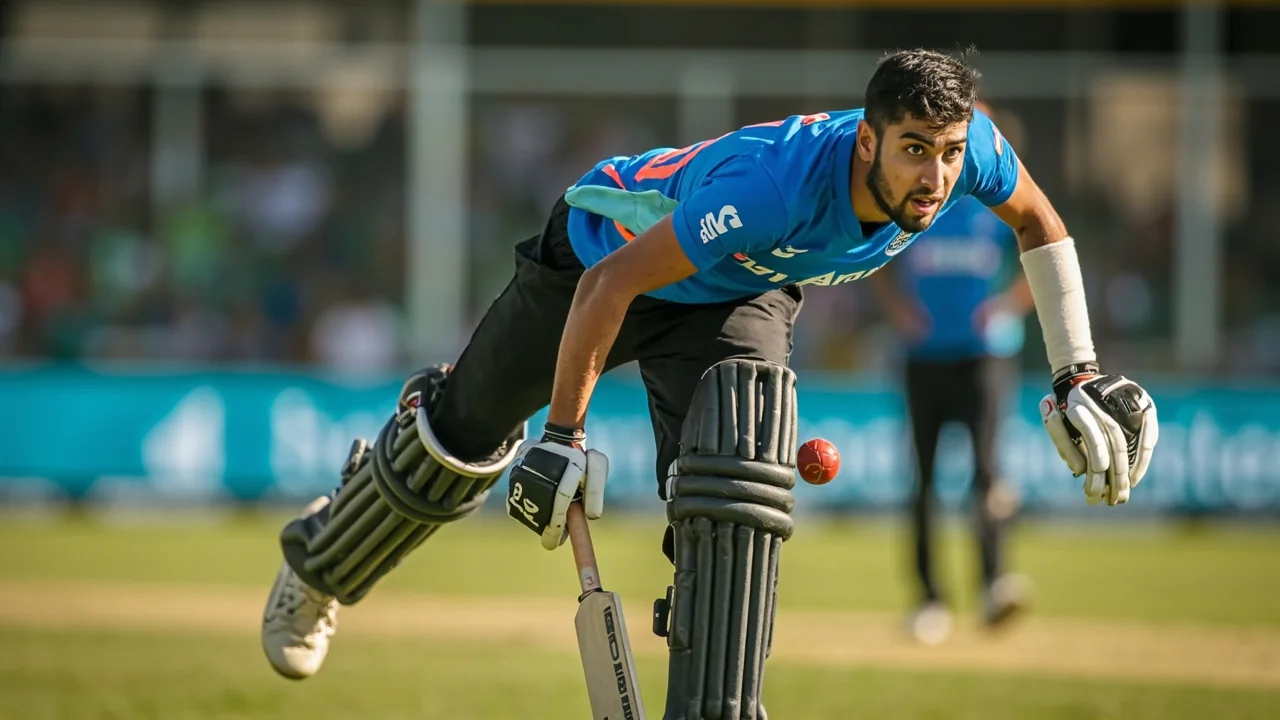
The Mixed Disability Cricket Series is played in IT20 format, which means each innings is limited to 20 overs and the match is scheduled for completion inside a single day. The mixed disability label refers to the composition of the playing XIs rather than to a hybrid format of the game itself. Each side fields a squad drawn from a wider differently abled cricket pool, and the playing XI can include players from a range of disability categories as defined by the relevant classification framework.
For readers unfamiliar with the format, the practical difference from a mainstream IT20 is in the playing conditions rather than the scoring rules. Wicket-keeping and fielding adjustments are made for players whose disability classification requires them; batting and bowling follow the standard IT20 laws. The result is a format that looks familiar on a scorecard but rewards teams that have trained together on these specific conditions rather than teams that have only played mainstream cricket together.
The seven-match length of the series gives both India and England room to absorb a slow start without losing the tour. A team that loses the first IT20 at Derby on 5 August has a second Derby match three days later to reset. A team that struggles at Hove on 12 August has the Arundel back-to-back to recover. The Lord's finale on 19 August then becomes the natural place for the tour to land on its final story, whether that is a series win, a drawn series or a narrow victory in the last game.
What to watch once the tour begins
Three concrete checkpoints will shape the story of the tour once it gets underway. The first is the playing XI at Derby on 5 August. The squad announcement names 16 players, and the first IT20 will reveal which eleven are preferred in English conditions and which role Magray opens with — bat first, bowl first, or trust the toss and react. The second is the back-to-back at Arundel on 15 and 16 August, which is the most physically demanding stretch of the tour and will test the load management work done by Saini and Pushkar in the Chhawla camp. The third is the Lord's IT20 on 19 August, where the tour's final story will be written regardless of where the series stands.
Beyond those checkpoints, two soft indicators will also matter. The first is how often the captain and vice-captain are rotated in conversation during the press moments around each venue; in IT20 cricket, leadership visibility tends to track with how clearly the side is reading its own game. The second is the state-by-state usage pattern across the seven matches — whether all eleven cricket associations get at least one player into the playing XI across the series, or whether the selection narrows to a smaller core. Both of these are reportable signals rather than predictive ones; the editorial job is to surface them after each match rather than read too much into them before the first ball.
The next specific event to watch is the opening IT20 itself on 5 August at OurCoop County Ground, Derby. That fixture turns the squad list into a playing XI, the captaincy into on-field decisions, and the venue plan into a live broadcast window. Until then, this brief has the squad announcement, the captaincy, the coaching staff, the venue plan and the camp location as its confirmed anchors. Everything else becomes a story once the first ball is bowled.
For readers who want to keep up with cricket news from the sports club desk across the series — squad moves, match-day XI reads, post-match notes — the sports club news list will track each tour update as it lands.
FAQ
Who is captaining India on the England mixed disability IT20 tour?
Jammu & Kashmir's Majid Ah Magray has been named captain, with Sai Akash Saivamani as vice-captain. The appointments were confirmed by the Differently Abled Cricket Council of India on 27 July 2026.
When does the series start and finish?
The first IT20 is at OurCoop County Ground, Derby, on 5 August 2026 and the seventh and final IT20 is at Lord's Cricket Ground on 19 August 2026. All seven matches start at 2:30 PM local time.
Where are the seven IT20s being played?
Two games at Derby (5 and 7 August), Uptonsteel Grace Road, Leicester (9 August), County Ground, Hove (12 August), two back-to-back games at Arundel (15 and 16 August), and the finale at Lord's on 19 August.
Which states are represented in the India squad?
Jammu & Kashmir, Tamil Nadu, Haryana, Karnataka, Andhra Pradesh, Uttar Pradesh, Vidarbha, Mumbai, Madhya Pradesh, Maharashtra and West Bengal all have at least one player in the 16-member group. Jammu & Kashmir provides three players, including the captain.
Who are the head coach and support staff?
Former Rajasthan Ranji captain Rohit Jhalani is head coach. Dev Dutt is coach, Rohit Sharma is fielding coach, Ramswaroop Saini is strength and conditioning coach, and Mayank Pushkar is physiotherapist.
Where is the squad preparing before the tour?
The squad is in a preparatory training camp at Chhawla, near Dwarka, in New Delhi, ahead of the flight to England.
Source note: Facts in this piece are drawn from Lokmat Times reporting dated 28 July 2026 on the DCCI announcement of the 16-member Indian squad for the Mixed Disability Cricket Series against England. Confirmed details include the captaincy (Majid Ah Magray) and vice-captaincy (Sai Akash Saivamani), the seven-match IT20 window from 5 to 19 August 2026, the five venues (Derby, Leicester, Hove, Arundel, Lord's), the 2:30 PM local start time, the head coach (Rohit Jhalani) and full support staff list, the 16-player state-by-state squad breakdown, and the Chhawla preparatory camp. DCCI Secretary Ravi Kant Chauhan and Vice President Sumit Jain quotes are taken from that report. No additional player statistics, opposition XI details or coaching quotes have been invented.
Responsible play: sports club publishes editorial coverage for adult readers in India. Paid fantasy contests may be restricted in some states. Check current app eligibility before entering any paid contest. If play stops being fun, stop. Helpline: iCall 9152987821 (10am–6pm Mon–Sat) · Gambling Therapy India.